Showing posts with label Drought. Show all posts

Saturday, October 25, 2008

Rain is dampening spirits of leaf peepers and barely helping drought in the Smokies

Today marks the second day of light rain in the Great Smoky Mountains, just in time for one of the heaviest weekends of peak leaf season visitation and damping the spirits of some leaf peepers, but not enough to put a dent in the water shortage caused by 2 years of drought.

The rain though light, is knocking many leaves that turned in the trees onto the ground making hiking and driving on the wet slippery leaves a little more hazardous than normal.

As more and more leaves fall to the ground the threat of wildfires increases especially given the huge numbers of trees that have died in the past 2 years due to the stresses of drought, last years late freeze and the massive hemlock kill off caused by the invasive exotic pest the Hemlock woolly adelgid which is decimating the hemlock trees throughout the Great Smoky Mountains.

All of this excess fuel is creating the potential for a huge wildfire situation and we need to make sure that we clear as much brush as possible from around our homes and make firebreaks.

Last week a cabin rental company America Mountains Rentals had just cleared brush from the sides and behind a cabin for rent on Bluff Mountain in Wears Valley just days before a brush fire broke out threatening the entire mountainside.

A total of 5 local fire departments fought the wildfire day and night and were able to put it out that to the fact that there was a firebreak that slowed the fire down.

Rain is dampening spirits of leaf peepers and barely helping drought in the Smokies

That entire section of Bluff Mountain was evacuated and fortunately American Mountain Rentals had a large enough inventory of cabins that they were able to give the evacuees alternate accommodations for the rest of their vacations.

Another cabin fire a few days ago burnt a large 4 bedroom luxury rental unit to the ground and luckily everyone was able to escape without injuries.

It is also crucial that we don't treat fire carelessly in the backcountry only making a fire when absolutely necessary in within a safe campfire containment area in designated campsites. More than once, I have come across a deserted campsite in the Great Smoky Mountains national park and found a fire still smoldering in a fire pit or ring.

It is also important that if you have been driving for a while that you do not park on top of a pile of leaves as your hot exhaust system can actually cause the leaves to ignite setting the leaves and your car on fire.

Light rain is expected to fall on and off throughout much of the Smokies today, and the weather should return to bright sunny skies by tomorrow.

Wednesday, October 24, 2007

Rain brings little relief to the Smoky Mountains.

Although it has been raining in much of the North Carolina and Tennessee Smokies from last evening until this morning it is too little to late to make much of a difference.

High winds and warmer temperatures throughout the Smoky Mountains yesterday morning turning into scattered light rain in the afternoon and the moderate rain into and throughout the night.

Since rainfall in the Smokies has been dramatically light this year as a result of the drought the Smoky Mountains region is suffering, branches and leaves that would have normally fallen throughout the course of stormy weather the past few months all seem to have fallen in the past 2 days.

branches in road

Since so many branches and leaves have fallen throughout the night drivers, hikers and horseback riders must pay extra attention. Some of the tourist to the Smokies who normally don't have to deal with wet leaf litter on the road may not realize how slippery and dangerous leaves on the road can be - especially on mountain roads.

Hikers must also pay attention when hiking on trails as there is lots of fresh leaf litter on hard packed earth. Mix in exposed tree roots, slippery rocks and wet leaves on a trail and hiking can be like walking on a sheet of glass and the stepping onto a banana which can spell disaster - especially on steep trails.

People riding horses may also have to contend with downed branches across horse trails that can block a trail off and the leaves can make for slippery footing even for the most sure footed horse.

Experts in Western North Carolina claim that even though a few showers in the past week may have dampened the ground and made many small streams and rivers flow again, it is not enough precipitation to properly percolate into the ground. At the current rate of water usage imbalance, hundreds of thousands of people in North Carolina can expect severe water issues or an interruption of water services if there are no interventions within the next 100 days.

According to the report sent to the North Carolina State Water Infrastructure Commission conservation and any normal rainfall which can be counted on may not be enough. Communities in North Carolina are already examining if they need to buy water from neighboring towns and cities, start even more severe conservation and restriction programs and maybe starting to use water from the last of the unused reservoirs.

The water shortage problem may be further complicated by the predicted light and dry weather meteorologists are predicting for the Smoky Mountains this winter.

Monday, October 22, 2007

Black bears are very active in the Great Smoky Mountains National Park

Although there have been no recent attacks by black bear in the Great Smoky Mountains Nations Park (GSMNP), some visitors are pushing their luck given how active the black bear are in this the most active bear season of the year.

The best way to handle yourself when you see a black bear is to stay as far away as possible and never let the bear think that you are a threat to the bear or its cubs which may be close by and out of your sight. You should however act as a threat of you can not get away and are about to be attacked by a bear.

Black bear in a tree

Fall season in the Great Smoky Mountains National Park is usually a very active bear season which is a treat to the Millions of visitors who come to visit the park and hopefully get a glimpse or even get to take a picture or shoot video of the symbolic icon animal of the Smoky Mountains.

In the fall, the black bear in the park are in a race against time trying to gather as much food as possible before they slow down and become inactive for the winter. Black bear in the national park don't hibernate in caves during the winter as for all practical purposes there are no caves in the national park other than a sealed off cave in Cades Cove and 2 caves in the White Oak Sinks area of the park between Tremont and Cades Cove.

Black Bear in the GSMNP instead nest in hollows of trees or in a hollow tree. Bears can most often be seen high up in trees rather than on the ground. The tree in the National Park most favored by the black bear are oak trees both for the acorns they provide as food and for the shelter the older large oak trees provide to the bear.

The black bear in the fall typically eat as many nuts, berries, grasses and forbs and insects and other animals including carrion it can in an attempt to fatten up and can put on as much as 4 - 5 pounds of winter weight a day.

black bear warning sign

The female black bears will winter pregnant and the size of a litter is often dependent to the volume and quality of food the black bear acquires during the fall active season. Black bears typically have 2 or 3 cubs in a good year and just 1 or no cubs at all after a year with a limited or harder harvest.

This year's drought which has heavily affected the Smoky Mountains and the natural food stock of the black bear so the resident bears are very active in order to find the food that they need. Just don't get between a hungry bear and its food!

One of the most common questions visitors to the National park ask me is "Where can I find the most black bear in the park?" Traveling extensively through the backcountry and developed areas in both the North Carolina and Tennessee sections of the National Park I have found that the best areas of the national park to find a black bear are: The Roaring Fork section of the park by Gatlinburg Tennessee, Cades Cove typically between Sparks Lane and Hyatt Lane in the edge of the woods, backcountry areas between Cosby TN a Big Creek NC, and along the Gatlinburg Bypass on the way to Pigeon Forge. This bypass referred to as the spur will often have bear walking right across the road.

This week I have already counted 22 black bear in the Great Smoky Mountains National Park:

  • 8 along the road leading into the Roaring Fork Area before the Ogle Cabin
  • 1 on the old Sugarland Trail between Roaring Fork and the Sugarlands
  • 2 in the Greenbrier section on trail along the way to campground 32
  • 2 in Big Cataloochee NC on the Boogerman trail near the stone walls
  • 1 in Big Cataloochee NC in the back field near the old cemetery on the hill.
  • 1 in Deep Creek NC Parking area
  • 3 in Cades Cove area on the Scott Mountain Trail
  • 2 in Cades Cove area on the Gregory Bald longer trail
  • 1 in Cades Cove in woods off Hyatt Lane
  • 1 in Cosby TN on the Hens Wallow Falls trail at the second fork

Although I am only counting 8 bear on Roaring Fork, the same bear I have seen 9 or 10 times I only counted as 1. I can almost guarantee that if you go to Roaring Fork in the next few days early in the morning or before sunset you will see at least 3 or 4 bear.

black bear photographers

Unfortunately many people who are watching or photographing the black bear are not acting wisely chasing the bear up the side of the hill, whistling to get the bears attention or just stopping their car and parking in the middle of the road. All of these are forbidden behavior and illegal and can result in death or serious injury.

ranger for black bears

Bear jams are so common right now in the Roaring Fork area that often there are now up to 2 officers trying to keep park visitors under control so no one gets attacked by a black bear or hit by a driver paying attention to the bear and not the road.

camera phone fool chases black bear

My favorite is the foolish man pictured here who kept climbing the hill chasing a mother bear with her cubs and taking pictures with a camera phone. He lucky left without being attacked by the momma black bear that had her 2 cubs along for the feast of acorns on the ground and before the National Park enforcement officer arrived. Imagine risking death, dismemberment or arrest to take a poor quality picture with his cellphone that he will probably erase or lose within a year or so. Was it worth it?

The bear are fun to watch but please pay attention to the national park black bear regulations and safety rules!

Saturday, October 20, 2007

Severe Drought Effects Entire Smoky Mountain Region including GSMNP

The Great Smoky Mountains National Park is the driest it has been in more than 100 years and it doesn't look like that will change soon. The severe drought is affecting springs, creeks, streams, rivers and reservoirs and the plants and animals that depend on the precious water they provide.

Surrounding towns and cities are imposing water restrictions and conservation measures but these alone may not be enough. Day by day as this drought continues private wells are drying up or going bad and more homes and businesses are having deeper wells being drilled in an effort to find enough water to sustain the household or business.

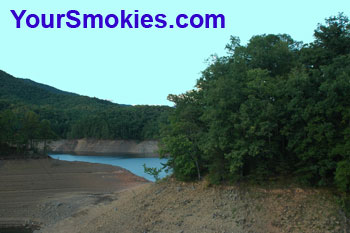
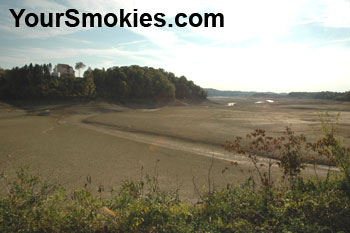
North Carolina Fontana Lake low water levelTennessee Douglas Lake low water level

Pictured above on the left is the Fontana Lake area in Fontana North Carolina which is at the south end of the National Park and on the right is Douglas Lake that is just north of the park in Sevierville and Dandridge Tennessee. Not only do these lakes provide water but their dams generate hydroelectric power which serves the Smoky Mountain Region.

While these lakes are normally lowered in the wintertime by the Tennessee Valley Authority (TVA) by purposely letting water through the spillways of the dams, there is obviously no need to do so this year.

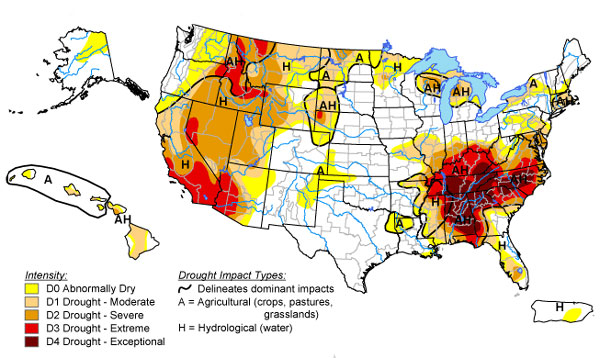
North Carolina and Tennessee areas affected by this year's drought

As seen by the chart above, not only are the Smoky Mountains of North Carolina and Tennessee affected by this year's drought, but large sections of the continental US are as well. Clicking on the map above will open a map of the drought effects as well as those regions not effect in the entire United States including Alaska and Hawaii.

Businesses as far north as Vermont are complaining the this years 2007 fall leaf season is coming late and is not as showy as normal with many trees turning brown before reaching the vibrant read, pinks and peach colors of most years.

Experts blame the lack of moisture on the phenomena and show the clear correlation in the past few years' weather warmer dryer weather and the decline in some of the forests natural food stock production for wild animals and farmed crops.

A direct effect of the drought is clearly seen in the Great Smoky Mountains National Park where normally vibrant lush creek and stream beds have been dry for months. Fishermen are working hard to find fish and obviously so are the National Parks inhabitants such as Black Bear, raccoons, birds, predatory fish and a host of other animals that depending on aquatic creatures to sustain them.

Groups such as Friends of the Smokies worked hard with a Brook Trout restoration project and between the loss of Eastern Hemlock Trees that normally shade streams to keep them cooler and help maintain moisture in the important breeding areas for fish due to an invasive pest called the Hemlock Woolly Adelgid and the current drought some of their intense well meaning effort may be for naught.

Further evidence of the drought in the Great Smoky Mountains National Park is the fact that there is a 23 mile stretch of the Appalachian Trail (AT) where there is virtually no water for backpackers and campers between the Derrick Knob Shelter and the Fontana Dam.

There are also backcountry campsites and shelters in the national park that are dry: sites 4, 5, 6, 7, 16, 21, 26, 35, 42, 113, and the hikers shelters: Double Spring Gap, Mollies Ridge, Russell Field Silers Bald and Spence Field.

As the drought continues more campsites and shelters may run dry and even with sites that have water a quart sized bottle may take 5 or more minutes to fill.

Fruits, nuts and vegetation are also sparser than normal which can lead to a difficult winter for animals that depend on these natural food stocks. Black Bears in the GSMNP are normally active in the autumn season gathering up and eating as much food stocks as possible so that they may make it through the winter where traditionally they are not active and may or may not hibernate through the winter.

While tourists love the blue skies and nice warm, dry weather we are experiencing in the Smoky Mountains of North Carolina and Tennessee, we locals are praying for a break with some sustained moderate volume rain. Heavy rainfall will just run off causing erosion and flooding but if the rain volume is relatively light and lasts for a while it can percolate better into the aquifers.

This year's drought in the Smokies won't be forgotten by locals residents and anyone visiting the region.

Saturday, September 22, 2007

Drought conditions still affect the Great Smoky Mountains National Park

Water is scarce in some parts of the Great Smoky Mountains National Park (GSMNP) and the Appalachian Trail which can spell serious trouble for hikers and campers who plan on normally abundant water sources.

We have seen our river and lake levels at extremely low levels this year due to an extended drought for this entire year. Springtime in the Smokies saw excessive wildfires in and around the Great Smoky Mountains National Park and surrounding state parks and forests.

Now to compound the water problems in the Smokies large areas of the park are "dry" where most or all of the free running springs won't allow any relief to parched hikers - or local animals.

In particular on the Appalachian Trail between Shuckstack Mountain north of Fontana Dam to Spence Field there is approximately a 16 mile stretch that is dry as well as the Russell Field Shelter and Mollies Ridge Shelter and backcountry sites 4, 5, 6, 7, 16, 26, 42, 113.

Smokies plant life

Today's gentle rain falling in parts of the Tennessee Smoky Mountains might have brought some mild relief from the warmth of the afternoon but other than making the leaves on the ground a little less crunchy while hiking and making for some nice raindrops on a leaf pictures (see above) it was not enough to elevate the issues with drying up streams, lakes and wells in both Tennessee and North Carolina.